How to Select the Right Generator for Your New Building in Sri Lanka
Why Generator Planning Matters.
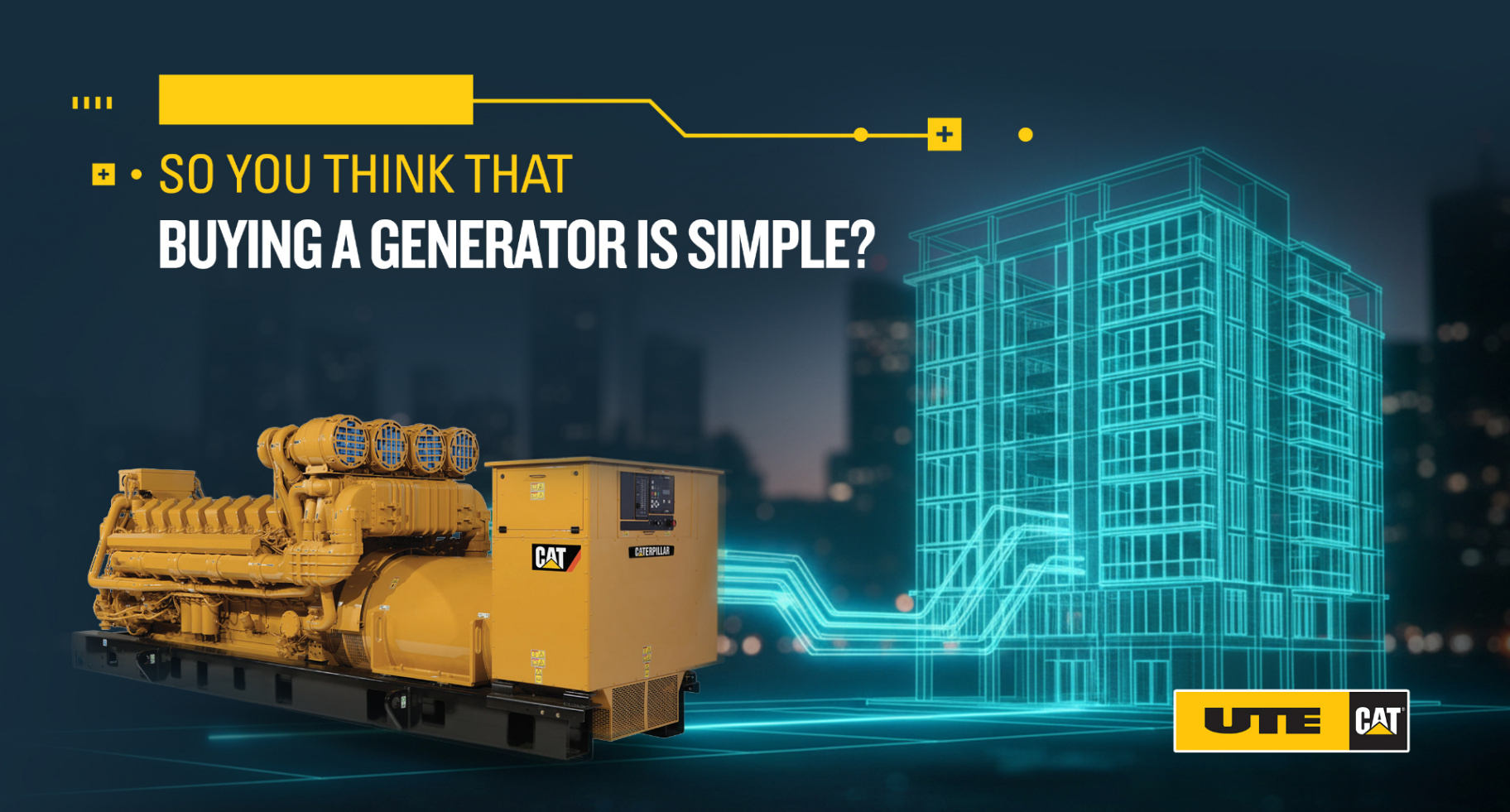
When considering the purpose of a generator, why is choosing one not given more priority? A compelling value addition for apartments, hotels, offices, hospitals and commercial properties is a building with a back-up power system which provides increased safety, comfort, convenience and operational security. These factors add more value for property buyers and owners.
Tradionally, most owners pay attention to design, structure, interiors, elevators, air conditioning and safety systems, when planning a new building. However, a generator plays a vital role in business continuity for apartments, hotels, hospitals, factories, warehouses, offices, and commercial buildings.
Electric power disruption can impact elevators, water pumps, security, emergency lighting, servers, refrigeration, medical equipment or production lines.
This is why the generator selection should be considered early, along with the building's electrical design.
Start With the Actual Power Requirement
The first step is to know the actual power demand of the building. When starting to consider installing a generator for their home or office, many customers ask, “What kVA generator do I need?” But the more important question to ask is, “Which systems are required to operate in the event of a power outage?”
Each building has essential loads and non-essential loads. Essential loads can be the elevators, emergency lights, pumps, fire systems, CCTV, access control, kitchen equipment, or certain machinery. After these loads are determined, an accurate determination of the appropriate generator capacity can be made.
Avoid Oversizing and Undersizing
The wrong size generator can lead to long-term issues. An oversized generator may result in higher initial cost, unnecessary fuel usage and higher maintenance expenses. Small generators can lead to equipment failure, poor performance, voltage drops and overload, which affects the “Value Adding” purpose of the building for critical production or services.
Not all the biggest generators are the best. It is the one that is the most suitable to meet the current and future needs of the building and has the least life cycle cost during the operation of the building. Along with the cost of the purchase, they should also take into account fuel consumption, maintenance, service support, parts availability, and reliability.
Sometimes an array of smaller generators with a synchronized control panel may offer a more efficient and cost-effective solution to the problem of power demand fluctuations in an application where it is required to install only a single generator large enough for the maximum load.
Choose a Globally Proven Solution
When selecting a generator for a new building, the suitability of the product around the globe also has to be taken into account. A generator should be appropriate for the load requirement, operating pattern, climate, installation space and future expansion requirements of the project.
Developers, consultants, facility managers and building owners can trust in globally-proven generator solutions. A generator with a broad reputation for reliability and durability, decreases the risk of failure of valuable operations and increases confidence in the long-term performance of the building’s purpose.
Understand How the Generator Will Be Used
The other important aspect is the way the generator will work. A standby generator comes into play in the event of a power failure in the main power grid. When electricity is not available for use, or where the grid supply is limited, a prime power generator is used for longer periods of use. A continuous power generator is an on-demand power generator that will run constantly depending on the demand.
The choice of right rating is vital since a generator operating occasionally is not the same as a generator operating for long durations every day. Before finalizing the generator choice, there are a lot of operating requirements that have to be understood.
Consider Starting Load
There is also a need to take into account starting load. Equipment like compressors, elevators, pumps, and motors may have a higher power demand during start-up than during normal operation. If this is not factored into the calculations, the equipment may not be able to restart when required
Plan the Generator Room Early
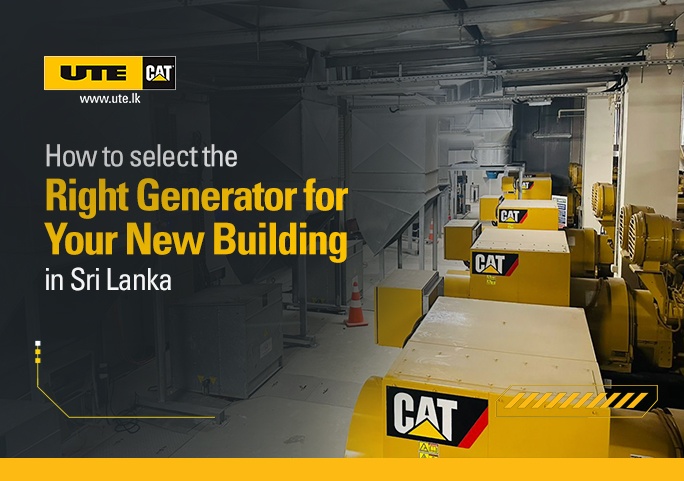
Another common problem faced in building projects is the planning of the generator room. Factors to consider are load, vibration, ventilation, fuel storage, cabling and access for repairs and maintenance. Room for future expansion needs to also be considered
Heat-related problems are likely to occur if there is poor ventilation, particularly due to the warm and humid climate of Sri Lanka. Thus, the generator room requirements need to be considered at the design phase.
Include an Automatic Transfer Switch
Particularly for hospitals, apartments, hotels, offices, and factories, where power restoration needs to be swift Automatic Transfer Switches (ATS) are also key components of a back-up power plan to quickly connect the generator in the event of loss of mains power and back when mains are restored.
Micro grid concept
With the addition of generators to a broader microgrid system, a variety of energy generation sources, including solar power systems, wind power systems, and battery energy storage, can all be connected to one, coherent and optimized energy network.
This can help to decrease the reliance on the national grid, cut down on operating expenses, and increase overall energy efficiency. The national grid can also be used as a back-up power source to guarantee reliable and uninterrupted power supply in case of need.
We consider this approach to be a viable and economical solution to better optimize your energy infrastructure and boost the energy security and operational resilience.
Choose a Complete Power Solutions Partner
Lastly, customers need to be looking for a complete power solutions partner, instead of just a generator. UTE provides a full range of Value Adding support for customers which include generator selection, load calculation, installation support, , genuine parts, preventive maintenance, and long - term service support.
CAT® generator solutions can save more than electricity, ensure safety, comfort, reliable operations backed by its reputation and investment in modern workshops, tooling and highly skilled technicians.
In Sri Lanka, be sure not to leave backup power as an afterthought when planning a new building. Make plans ahead, think through the calculations and select the generator solution that will enable your building to operate for the purpose that you need..
Call UTE today to get expert advice on selecting the most suitable generator for your needs, installation instructions, genuine CAT® solutions and long-term after-sales support.
UTE ~ The Journey Continues…Long After the Sale
📞 Contact: 077 140 7070
✉️ Email: [email protected]
🌐 Website: www.ute.lk
When considering the purpose of a generator, why is choosing one not given more priority? A compelling value addition for apartments, hotels, offices, hospitals and commercial properties is a building with a back-up power system which provides increased safety, comfort, convenience and operational security. These factors add more value for property buyers and owners.
Tradionally, most owners pay attention to design, structure, interiors, elevators, air conditioning and safety systems, when planning a new building. However, a generator plays a vital role in business continuity for apartments, hotels, hospitals, factories, warehouses, offices, and commercial buildings.
Electric power disruption can impact elevators, water pumps, security, emergency lighting, servers, refrigeration, medical equipment or production lines.
This is why the generator selection should be considered early, along with the building's electrical design.
Start With the Actual Power Requirement
The first step is to know the actual power demand of the building. When starting to consider installing a generator for their home or office, many customers ask, “What kVA generator do I need?” But the more important question to ask is, “Which systems are required to operate in the event of a power outage?”
Each building has essential loads and non-essential loads. Essential loads can be the elevators, emergency lights, pumps, fire systems, CCTV, access control, kitchen equipment, or certain machinery. After these loads are determined, an accurate determination of the appropriate generator capacity can be made.
Avoid Oversizing and Undersizing
The wrong size generator can lead to long-term issues. An oversized generator may result in higher initial cost, unnecessary fuel usage and higher maintenance expenses. Small generators can lead to equipment failure, poor performance, voltage drops and overload, which affects the “Value Adding” purpose of the building for critical production or services.
Not all the biggest generators are the best. It is the one that is the most suitable to meet the current and future needs of the building and has the least life cycle cost during the operation of the building. Along with the cost of the purchase, they should also take into account fuel consumption, maintenance, service support, parts availability, and reliability.
Sometimes an array of smaller generators with a synchronized control panel may offer a more efficient and cost-effective solution to the problem of power demand fluctuations in an application where it is required to install only a single generator large enough for the maximum load.
Choose a Globally Proven Solution
When selecting a generator for a new building, the suitability of the product around the globe also has to be taken into account. A generator should be appropriate for the load requirement, operating pattern, climate, installation space and future expansion requirements of the project.
Developers, consultants, facility managers and building owners can trust in globally-proven generator solutions. A generator with a broad reputation for reliability and durability, decreases the risk of failure of valuable operations and increases confidence in the long-term performance of the building’s purpose.
Understand How the Generator Will Be Used
The other important aspect is the way the generator will work. A standby generator comes into play in the event of a power failure in the main power grid. When electricity is not available for use, or where the grid supply is limited, a prime power generator is used for longer periods of use. A continuous power generator is an on-demand power generator that will run constantly depending on the demand.
The choice of right rating is vital since a generator operating occasionally is not the same as a generator operating for long durations every day. Before finalizing the generator choice, there are a lot of operating requirements that have to be understood.
Consider Starting Load
There is also a need to take into account starting load. Equipment like compressors, elevators, pumps, and motors may have a higher power demand during start-up than during normal operation. If this is not factored into the calculations, the equipment may not be able to restart when required
Plan the Generator Room Early
Another common problem faced in building projects is the planning of the generator room. Factors to consider are load, vibration, ventilation, fuel storage, cabling and access for repairs and maintenance. Room for future expansion needs to also be considered
Heat-related problems are likely to occur if there is poor ventilation, particularly due to the warm and humid climate of Sri Lanka. Thus, the generator room requirements need to be considered at the design phase.
Include an Automatic Transfer Switch
Particularly for hospitals, apartments, hotels, offices, and factories, where power restoration needs to be swift Automatic Transfer Switches (ATS) are also key components of a back-up power plan to quickly connect the generator in the event of loss of mains power and back when mains are restored.
Micro grid concept
With the addition of generators to a broader microgrid system, a variety of energy generation sources, including solar power systems, wind power systems, and battery energy storage, can all be connected to one, coherent and optimized energy network.
This can help to decrease the reliance on the national grid, cut down on operating expenses, and increase overall energy efficiency. The national grid can also be used as a back-up power source to guarantee reliable and uninterrupted power supply in case of need.
We consider this approach to be a viable and economical solution to better optimize your energy infrastructure and boost the energy security and operational resilience.
Choose a Complete Power Solutions Partner
Lastly, customers need to be looking for a complete power solutions partner, instead of just a generator. UTE provides a full range of Value Adding support for customers which include generator selection, load calculation, installation support, , genuine parts, preventive maintenance, and long - term service support.
CAT® generator solutions can save more than electricity, ensure safety, comfort, reliable operations backed by its reputation and investment in modern workshops, tooling and highly skilled technicians.
In Sri Lanka, be sure not to leave backup power as an afterthought when planning a new building. Make plans ahead, think through the calculations and select the generator solution that will enable your building to operate for the purpose that you need..
Call UTE today to get expert advice on selecting the most suitable generator for your needs, installation instructions, genuine CAT® solutions and long-term after-sales support.
UTE ~ The Journey Continues…Long After the Sale
📞 Contact: 077 140 7070
✉️ Email: [email protected]
🌐 Website: www.ute.lk