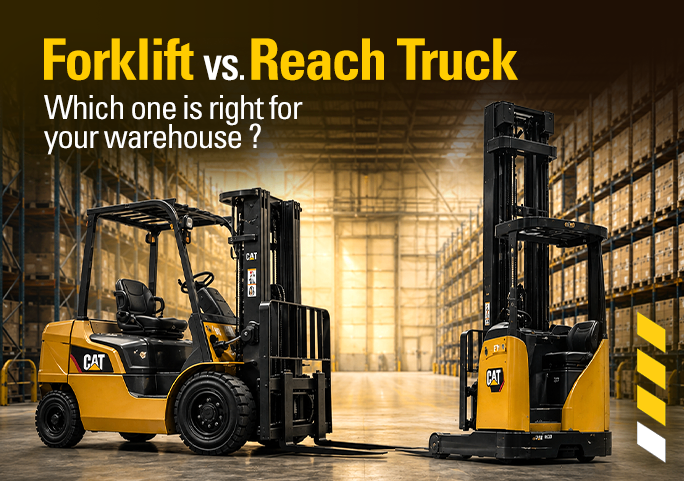
Forklift vs. Reach Truck: Which One Is Right for Your Warehouse?
August 31, 2026
HOMENEWS & ARTICLESForklift vs. Reach Truck: Which One Is Right for Your Warehouse?
Forklift vs. Reach Truck: Which One Is Right for Your Warehouse?
Forklifts and reach trucks are two important forms of warehouse handling equipment used across warehouses, logistics centres, factories and storage facilities. Both machines can lift, move and stack goods, but their designs suit different working conditions.
Selecting the right truck can improve productivity, support safer load handling, reduce unnecessary movement and make better use of available space. This reach truck vs forklift guide compares their capabilities and applications to help businesses choose the right equipment for their warehouse needs.
What is a Forklift?
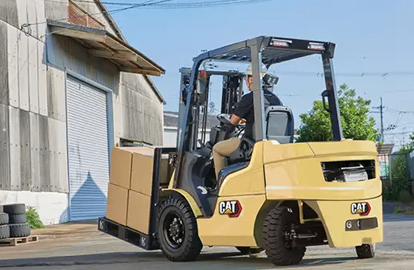
It is a general-purpose industrial truck designed to lift, carry, load and unload goods. Most counterbalance forklifts have forks mounted at the front, a vertical mast and a counterweight at the rear that balances the load.
Forklifts are commonly used for:
Loading and unloading lorries
Moving pallets around warehouses and factories
Handling goods in indoor and outdoor operational areas
Transporting construction materials and industrial loads
The available warehouse forklift types include electric, diesel and LPG-powered models, with different capacities, tyres and mast configurations for specific applications.
What is a Reach Truck?
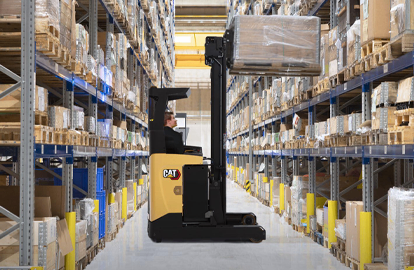
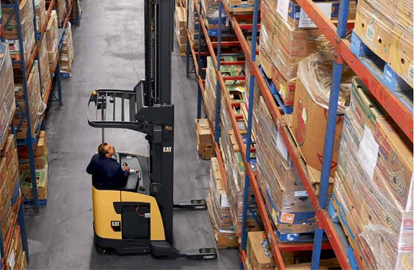
A reach truck is a specialised electric warehouse truck designed for narrow aisles and high storage racks. Its mast or fork carriage extends forwards to place or retrieve a pallet, then retracts to keep the load close to the truck while travelling.
Reach trucks are primarily intended for indoor use on smooth, level floors. Their compact chassis, tight turning circle and high lifting capability make them particularly useful in distribution centres with dense pallet racking.
Forklift vs. Reach Truck: Key Differences
The main difference between a forklift and a reach truck is in how and where each machine handles loads.
Factor
Forklift
Reach Truck
Design and function
Uses a rear counterweight to balance loads carried in front
Extends and retracts its forks or mast to access racking
Operating environment
Suitable for warehouses, yards, factories and some construction areas
Designed mainly for indoor warehouse floors
Load capacity and lift height
Commonly selected for heavier loads and moderate stacking heights
Suited to high-rack pallet storage, subject to model capacity
Aisle width and manoeuvrability
Requires more turning and operating space
Works in narrower aisles
Power source
Available in electric, diesel and LPG models
Usually battery powered
Surface suitability
Certain models can handle uneven outdoor surfaces
Requires smooth, level flooring
Benefits of Using a Forklift
A forklift offers considerable flexibility when goods must move between different parts of a facility. Depending on its specification, it can handle palletised stock, industrial components, building materials and attachments for specialised loads.
Its main advantages include:
Strong load-handling capability
Indoor and outdoor operating options
Efficient lorry loading and unloading
Suitability for mixed warehouse and factory duties
For businesses managing varied tasks, forklifts can support receiving, put-away, replenishment and dispatch with one adaptable machine.
Benefits of Using a Reach Truck
Reach trucks allow warehouses to store pallets higher while reducing the aisle space needed between racks. This can increase storage capacity within an existing building and limit the distance travelled during pallet movements.
Their responsive steering and compact design support efficient indoor handling. Many models also provide operator visibility and controls designed for accurate pallet placement at height. Reach trucks are well suited to high-throughput distribution centres, cold stores and facilities where floor space carries a high operational cost.
Which One Suits Your Operation?
Choose a forklift when operations involve heavier loads, outdoor travel, lorry loading or movement across mixed working areas. Choose a reach truck when the priority is narrow-aisle access, high racking and efficient indoor pallet handling.
Before deciding, assess:
Pallet weight and dimensions
Maximum rack height
Aisle width and turning space
Floor condition
Travel distances and daily operating hours
Some facilities benefit from both machines. A forklift can unload incoming goods and move them to the storage area, while a reach truck places pallets into high-level racking.
Make Equipment Selection Part of Warehouse Planning
Forklifts suit flexible, heavy-duty and mixed-use operations, while reach trucks are designed for space-efficient storage in narrow aisles and high racking. The right choice should reflect the warehouse layout, load profile and daily workflow.
UTE supplies warehouse trucks, racking and support systems backed by local industry knowledge and ongoing service.
Explore UTE’s Transportation & Logistics solutions to find the right reliable material handling solutions for safer, more efficient warehouse operations.
The Finning Customer Portal is your personal digital dealership,
giving you 24/7 online access to...
A simplified view of your fleet in one central place
Quickly view parts orders and download past invoices
Easy online access to all of your documents
Insights that help your business grow
Plus, much more...
Simply fill in the form to sign up and get started.
DEALER SERVICES
Our gas generator sets range from 100 to 4,500 ekW (100 to 4,500 kVA) in a single unit,
making selection, permitting, and installation easy. These industrial and commercial gas
generator sets are designed for reliable operation with various gaseous fuels, including
natural gas, biogas, coal gas, propane, and alternative fuels. We build durable,
cost-effective power systems that are integrated with controls, exhaust systems, fuel
trains, combined cooling heat & power skids, and switchgear.
Our gas generator sets range from 100 to 4,500 ekW (100 to 4,500 kVA) in a single unit,
making selection, permitting, and installation easy. These industrial and commercial gas
generator sets are designed for reliable operation with various gaseous fuels, including
natural gas, biogas, coal gas, propane, and alternative fuels. We build durable,
cost-effective power systems that are integrated with controls, exhaust systems, fuel
trains, combined cooling heat & power skids, and switchgear.
Our gas generator sets range from 100 to 4,500 ekW (100 to 4,500 kVA) in a single unit,
making selection, permitting, and installation easy. These industrial and commercial gas
generator sets are designed for reliable operation with various gaseous fuels, including
natural gas, biogas, coal gas, propane, and alternative fuels. We build durable,
cost-effective power systems that are integrated with controls, exhaust systems, fuel
trains, combined cooling heat & power skids, and switchgear.








 BACK
BACK